2048 Cupcakes — Free Cupcake Merge Game
2048 Cupcakes is the sliding tile puzzle 2048 with the numbers taken off the board. Every tile is a cupcake, and two identical cupcakes pushed together bake into the next one up the ladder — two vanilla sprinkle cupcakes become a strawberry, two strawberries become a chocolate fudge, and so on through eleven bakes until you reach the royal crown cupcake. The arithmetic underneath is unchanged; what changes is that you play by recognising pictures instead of reading numbers, which makes the game faster to read and, for a lot of players, considerably harder to plan. It runs in the browser, free, with nothing to download and no account to make.
The Eleven Cupcakes, In Order
This is the part most cupcake boards never tell you. There are exactly eleven bakes, each one worth double the last, and knowing the running order is the difference between guessing which two tiles match and seeing three moves ahead. The right-hand column shows what each cupcake would be in classic 2048 — you can put those numbers on the board at any time with the Show Numbers button above the game.
| Cupcake | Cupcake | Level | Classic 2048 |
|---|---|---|---|
 | Vanilla sprinkle | 1 | 2 |
 | Strawberry | 2 | 4 |
 | Chocolate fudge | 3 | 8 |
 | Blueberry | 4 | 16 |
 | Matcha | 5 | 32 |
 | Caramel drizzle | 6 | 64 |
 | Cherry cream | 7 | 128 |
 | Rainbow sprinkle | 8 | 256 |
 | Stardust swirl | 9 | 512 |
 | Jewelled | 10 | 1024 |
 | Royal crown | 11 | 2048 |
Two things about that ladder are worth noticing before you start. First, no two neighbouring bakes share a colour — cream, pink, brown, purple, green, amber, red, rainbow, midnight blue, pearl and gold run straight down the list — so you can identify any cupcake from its colour alone, without stopping to study the decoration. Second, every cupcake is drawn at the same size, so nothing on the board is louder than anything else: what tells you a tile is valuable is its colour and its ornament, not how much space it takes up. The clearest stretch is levels 3 to 6 — chocolate brown, blueberry purple, matcha green and caramel amber are four completely different colours, and that is where you can move fastest.
How to Play 2048 Cupcakes
- Press the arrow keys on a computer, or swipe on a phone or tablet. Every tile on the board slides in that direction at once — you never move a single cupcake on its own.
- When two identical cupcakes collide, they bake into one cupcake of the next level, and you score its value.
- A cupcake that has just merged cannot merge again on the same move. Four vanilla cupcakes in a row become two strawberries, not one chocolate fudge.
- Every move that changes the board adds one new cupcake in a random empty space — nearly always a vanilla sprinkle, occasionally a strawberry.
- Bake the royal crown cupcake and you win. You can carry on afterwards to push your score higher.
- The run ends only when the grid is full and no two neighbouring cupcakes match. A full board by itself is not the end.
Reading the Board Without Numbers
Classic 2048 gives you a sorted numeric scale, so your eye can rank tiles instantly. Cupcakes do not come pre-sorted, and this is the real difference in difficulty between the two games: you have to learn the order before you can plan. Three habits make that quick.
- Learn the ladder by colour, not by flavour. Cream, pink, brown, purple, green, amber is the first six. Once that sequence is automatic, you stop checking individual tiles and start seeing groups.
- Turn on Show Numbers for your first few games. The button above the board prints each cupcake's classic value in its corner. Play a couple of rounds with it on, then switch it off — most players find the ladder has stuck by then. Your choice is remembered in this browser.
- Use the wrapper as a second signal. Frosting colour and wrapper colour agree on every bake — pink frosting sits in a pink wrapper, matcha in mint green — so whichever half of the tile your eye lands on first identifies the cupcake on its own.
Strategy for 2048 Cupcakes
- Pin the biggest cupcake in a corner and keep it there. A corner tile is the only tile on the board that cannot be pushed away from two directions at once, which is why every strong run is built around one.
- Use three directions, not four. With your best cupcake bottom-left, slide left, down and right freely and treat "up" as an emergency. Almost every collapsed board can be traced to one unnecessary upward swipe.
- Keep the bottom row solid. A row of jewelled, stardust, rainbow, cherry is stable. The same row with a gap invites a fresh vanilla cupcake to spawn in the middle of it and cut your chain in half.
- Bake to make room, not just to score. Empty cells are the resource that actually keeps you alive. Six free cells is a position with options; one free cell is a position that ends on the next unlucky spawn.
- Clear the small cupcakes early. Vanilla and strawberry tiles are cheap to merge and expensive to leave lying around, because they are what clog the middle of the board when the top four start taking up space.
- Restart a stranded board. If your best cupcake has drifted into the middle with small ones on both sides, the run is usually already lost — a fresh board costs less than grinding that one out.
Undo and Swap
Two buttons sit under the board, and they are the main thing this version adds to the cupcake formula. Undo gives you two rewinds per game; each one restores the board and the score to the state before your last move, so you never keep points from a move you take back. Swap gives you one exchange: tap Swap, then tap two different cupcakes to trade their places. Identical cupcakes cannot be swapped, because trading two matching tiles changes nothing.
The practical advice on both: spend an undo on a swipe that broke your corner rather than one that merely scored badly, and save the swap for the late game, when a single small cupcake is trapped between two large ones and blocking a chain that is otherwise ready to fire. If the move you undo happened to be a swap, the swap charge comes back — one undo can never cost you both. And do not save them for the very end: once the board has no legal moves left, both buttons are disabled and any charges left are wasted.
2048 Cupcakes vs the Original 2048
Mechanically they are the same game: same 4×4 grid, same merge rule, same spawn behaviour, same scoring. The differences are all in how you read the board. Numbers are ordered and instantly comparable, so classic 2048 asks more of your planning and less of your memory. Cupcakes are unordered until you learn them, so this version asks you to hold the ladder in your head while you plan — which is why it feels harder for the first few games and often more relaxing after that. The two boards on this site keep separate best scores, so a bad run on one will not touch your record on the other. If you would rather have the numbers back, the classic 2048 board is here.
Frequently Asked Questions
What is 2048 Cupcakes?
A cupcake-themed version of the sliding puzzle 2048. The rules are identical — slide the whole board, merge two matching tiles into the next one up — but eleven cupcake illustrations replace the numbers, so you match by picture instead of by value.
What is the final cupcake?
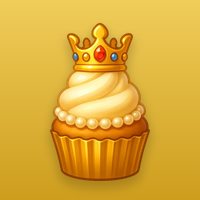
The royal crown cupcake: pearl-and-gold frosting under a jewelled crown. It sits where the 2048 tile sits in the original game, so baking one wins the round. You can keep playing afterwards for a higher score.
How many cupcake levels are there?
Eleven, in this order: vanilla sprinkle, strawberry, chocolate fudge, blueberry, matcha, caramel drizzle, cherry cream, rainbow sprinkle, stardust swirl, jewelled, royal crown. Each is worth double the one before, matching 2 through 2048.
Is 2048 Cupcakes free?
Yes. It runs in your browser, costs nothing, and needs no download and no account. No real money is involved at any point.
Can I see the numbers behind the cupcakes?
Yes — the Show Numbers button above the board puts each cupcake's classic value in its corner, and your choice is remembered in this browser.
Does it work on a phone?
Yes. Swipe in any direction to slide the board; the layout scales to the screen on iOS and Android browsers, and there is no app to install.
Is my best score shared with the classic 2048 board?
No. Each board keeps its own best score in your browser's local storage, so a good run on one does not overwrite the other. Nothing is sent anywhere, and clearing your browser data resets both.
Who invented 2048?
Italian developer Gabriele Cirulli released the original 2048 as open source in March 2014. Cupcake versions are community reskins of that game; this one uses our own cupcake artwork and our own implementation of the rules.
Disclaimer: This is a free puzzle game for entertainment only.
📖 Memory Palace Technique Meets Gaming — Train Recall Like a Champion
📖 Memory Palace Technique Meets Gaming — Train Recall Like a Champion